News
Vatican Declares SSPX Bishops Excommunicated After Écône Consecrations
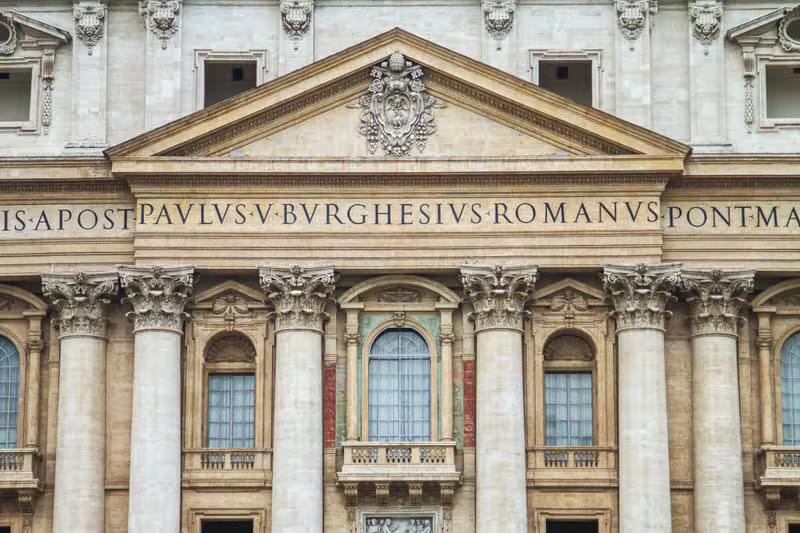
On Thursday, July 2, 2026, the Vatican issued a decree that declared that the bishops consecrated by the Society of St. Pius X (SSPX) have incurred a latae sententiae excommunication. The decree also warned clergy and lay faithful against adhering to the “schism” and outlined the canonical consequences for those who do so.
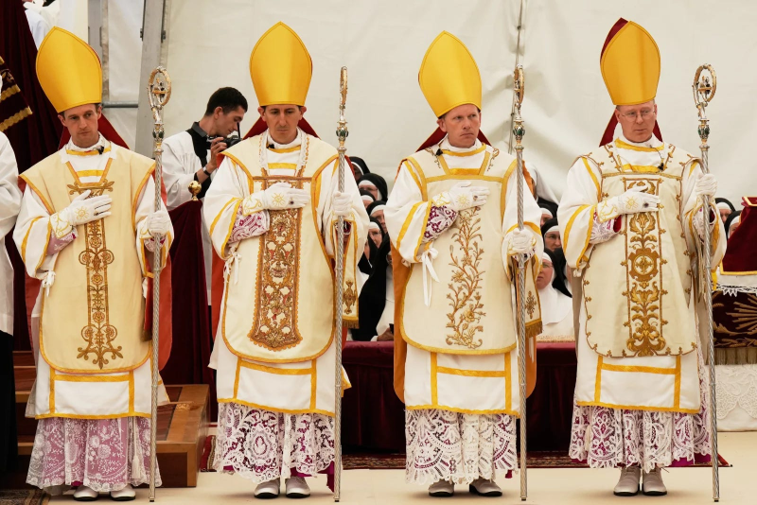
The decree stated: “Notwithstanding the admonitions addressed to the Superior General of the Priestly Fraternity of Saint Pius X, Bishop Alfonso de Galarreta, having performed a schismatic act by means of the episcopal consecration of four priests, without pontifical mandate and against the will of the Supreme Pontiff, has incurred ipso facto the penalties provided for in can. 1387 and can. 1364 §1 CIC 2021.”
Canonical penalties cited
For clarification, Canon 1387 states: “Both the Bishop who, without a pontifical mandate, consecrates a Bishop, and the one who receives the consecration from him, incur a latae sententiae excommunication reserved to the Apostolic See.”
Canon 1364 §1 says: “An apostate from the faith, a heretic or a schismatic incurs a latae sententiae excommunication, without prejudice to the provision of can. 194.”
The document continued: “It is therefore declared, for all legal effects, that the aforementioned Bishop Alfonso de Galarreta, as well as Pascal Schreiber, Michael Goldade, Michel Poinsinet de Sivry, and Marc Hanappier, have incurred ipso facto the penalty of latae sententiae excommunication reserved to the Apostolic See.”
In a development surpassing that of the 1988 Ecclesia Dei decree, the DDF also warned that the “clergy and lay faithful are admonished not to adhere... lest they incur ipso facto the penalty of latae sententiae excommunication.” This appears to say that even the SSPX faithful face excommunication.
The document was signed by Cardinal Fernández, Prefect of the Dicastery for the Doctrine of the Faith, Msgr. Armando Matteo, Secretary for the Doctrinal Section, and Abp. John J. Kennedy, Secretary for the Disciplinary Section.
The question of formal adherence
The decree also cited an Explanatory Note of the Pontifical Council for Legislative Texts from 1996 for further clarification. That note says: “As Motu Proprio [Ecclesia Dei] No. 5 c) states, latae sententiae excommunication for schism concerns those who formally adhere to the said schismatic movement.”
Cardinal Fernández cited this document as the explanation; however, the note itself says the exact scope of “formal adherence to the schism” should be referred to the competent Congregation for the Doctrine of the Faith. This raises the question: what exactly is formal adherence?
The note explains that such adherence must involve two complementary elements: an internal element, consisting in freely and consciously sharing the substance of the schism, and an external element, consisting in the externalization of that option. It lists exclusive participation in Lefebvrist ecclesial acts as the most manifest sign, while also noting that this is not a univocal sign because some faithful may attend SSPX liturgies without sharing a schismatic spirit.
The note further distinguishes between clergy and laity. In the case of Lefebvrist deacons and priests, it says their ministerial activity in the movement is a more than evident sign of formal adhesion. In the case of other faithful, however, occasional participation in liturgical acts or activities of the Lefebvrist movement, without adopting an attitude of doctrinal and disciplinary disunity, is not sufficient by itself to constitute formal adherence.
Questions left unresolved
The note states that the intention of the person must be taken into account, as well as the translation of this interior disposition into acts. It concludes that the various situations must be judged on a case-by-case basis in the competent external and internal forums.
Canon 1323 says that no one is liable to a penalty who acted under the compulsion of grave fear or by reason of necessity or grave inconvenience, unless the act is intrinsically evil or tends to be harmful to souls. Canon 1324 states that in certain circumstances penalties must be diminished or replaced by a penance, and that in those circumstances the offender is not bound by a latae sententiae penalty.
Because the Vatican decree imposes only latae sententiae penalties, some may question how these provisions apply to the present case, particularly if those involved argue that they acted out of necessity or sincerely believed that a state of necessity existed. The decree itself does not explicitly address these canons or explain why their exceptions would not apply.
Likewise, the decree’s warning to clergy and laity leaves the practical meaning of formal adherence largely undefined. While the 1996 explanatory note indicates that occasional attendance at SSPX liturgies is not, by itself, sufficient to constitute formal adherence, determining whether an individual has incurred canonical penalties remains a case-by-case question dependent upon both internal disposition and external actions.
The decree therefore raises significant canonical questions that it does not fully resolve. Until the Holy See provides further clarification, uncertainty remains regarding how the penalties for formal adherence are to be interpreted and applied under the Church’s own canon law.